
Carpenter Bee Control
Serving Illinois and Indiana
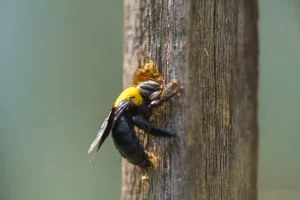 Small, clean round holes appearing in exterior wood are often the first visible sign of carpenter bee activity. These bees are typically calm and rarely sting unless they are handled or directly threatened. During warmer months, they are commonly seen hovering around decks, eaves, and other wooden structures. Despite their non-aggressive nature, they can still cause significant structural concerns over time.
Carpenter bees tunnel into wood to create nesting chambers where eggs are laid, and larvae develop. As this process repeats, the interior wood can become hollowed out, forming expanding tunnels that weaken structural integrity. Over time, homes throughout Illinois may face costly repairs as this hidden damage continues.
The same nesting sites are often reused year after year, with bees remaining inside until they fully mature. Because early signs of activity are easy to miss, professional carpenter bee control from Anderson Pest Solutions is often recommended to help prevent ongoing damage and protect your Illinois home.
Carpenter Bee Appearance and Identification Tips
A few clear physical differences make carpenter bees stand out from other bees. Their robust body size, bold coloring, and shiny, hair-free appearance help make them easy to spot in yards and near wooden structures. Below are key identification tips used for identifying carpenter bees:
- Body Color: Carpenter bees typically display a subtle metallic sheen that can include hints of blue, green, or purple. In contrast, regular bees usually have softer golden and black striping that appears less shiny and reflective.
- Abdomen Texture: Carpenter bees have a smooth, glossy black abdomen with very little hair. Regular bees, however, are covered in fine hairs that give their abdomen a softer, more textured appearance.
- Thorax Coloring: While both carpenter bees and regular bees have fuzzy thoraxes, carpenter bees tend to show a brighter, more noticeable yellow coloration in this area that stands out more clearly.
- Size and Shape: Carpenter bees are usually larger and more heavily built, with a thick, sturdy body. Regular bees tend to be smaller, more slender, and lighter in overall form.
Ready For a Free Pest Control Quote?
Click the button below to leave your information and we’ll be in touch with a free quote!
What Makes Carpenter Bees Different from Honey Bees
At first, carpenter bees and honey bees may seem alike, but they are not the same species. Variations in behavior, nesting locations, and physical characteristics clearly set them apart. Below are the most significant differences between them:
- Temperament: Carpenter bees may hover around people in a territorial manner, but they rarely sting. Regular bees are generally calm and usually sting only when they feel threatened or disturbed.
- Nesting Habits: Carpenter bees create nests by drilling into wood and forming tunnels within structural materials. In contrast, regular bees typically build nests in trees, underground burrows, wall cavities, or other sheltered locations using wax combs.
- Social Behavior: Carpenter bees are typically solitary insects and are most often seen alone or in small groups. Regular bees, however, live in highly organized colonies that can include thousands of individuals working together.
- Pollination Role: Carpenter bees are generally less efficient pollinators, while regular bees play an essential role in pollinating flowers, crops, and many different plant species.
The Advantages of Choosing Anderson Pest Solutions for Carpenter Bee Control
Homeowners throughout Illinois have access to many carpenter bee control services, and choosing us means working with knowledgeable experts focused on preventing damage to your home. Here are several advantages of selecting our extermination services:
- Experienced Technicians: Our exterminators are extensively trained in carpenter bee behavior as well as treatment methods specific to the region. They are experienced in identifying active nesting sites, understanding seasonal activity patterns, and telling the difference between nesting behavior and territorial hovering to ensure accurate and effective service.
- Transparent Communication: We provide a thorough evaluation of carpenter bee activity along with a clear, step-by-step breakdown of the treatment process. In addition, we offer practical prevention advice to help reduce future wood damage and remain available throughout the service to answer any questions that arise.
- Easy Online Management: Our simple, user-friendly online platform makes it easy to schedule appointments, process payments, and monitor service updates. From start to finish, your carpenter bee control experience is designed to be smooth, convenient, and stress-free.
- Fast Local Response: We prioritize rapid response times from nearby carpenter bee control professionals who can act quickly to reduce damage before it escalates. Even short delays can lead to more serious structural issues and increased repair costs, which we actively work to help prevent.
- Customized Treatment Plans: Our carpenter bee control solutions are customized to fit the specific needs of your property. After a detailed inspection, we target active entry points, weakened wood areas, and potential nesting sites to eliminate current infestations and help reduce the chance of future activity.
Overview of Our Carpenter Bee Control Process
When carpenter bees start creating visible damage, many homeowners reach out to Anderson Pest Solutions for assistance. Here’s how we handle the issue with fast removal and long-term protection:
- Thorough Inspection: We carry out a detailed, in-depth inspection of your property to identify active carpenter bee entry points as well as other potential problem areas. Our technicians look for key signs, including males hovering in defensive behavior, yellow staining or discoloration on wood, fine sawdust-like material, and clean, perfectly round entry holes. This evaluation allows us to determine how severe the activity is and select the most effective treatment plan.
- Advanced Treatment Methods: Our approach focuses on directly treating active tunnels while eliminating developing insects inside the wood and reinforcing vulnerable areas with protective applications. This method is intended to stop carpenter bee activity and reduce the likelihood of additional structural damage.
- Ongoing Prevention Plan: Our prevention plan is designed to help reduce the chances of carpenter bees returning in the future. We offer ongoing maintenance guidance, recommend practical property adjustments, and provide helpful tips to lower the risk of reinfestation and prevent costly repairs over time.
Carpenter Bee Removal Services in Illinois
We recognize that many homeowners attempt DIY solutions for carpenter bee control, but these efforts are often unsuccessful when nesting is extensive or hard to locate. Carpenter bees can establish multiple hidden entry points, and any overlooked area may lead to reinfestation in Illinois, sometimes becoming more serious over time. We have helped many clients who initially tried self-treatment without success.
At Anderson Pest Solutions, we provide comprehensive removal paired with prevention strategies aimed at limiting future infestations. We strongly encourage professional treatment because carpenter bees can remain active in hidden spaces, allowing infestations in Illinois to return. Our approach is designed to address both visible signs and concealed nesting activity.
Get in touch with Anderson Pest Solutions today for prompt carpenter bee removal services provided by experienced technicians.
Carpenter Bee Control FAQs
We have served homeowners in the Illinois area since , building a reputation as a trusted pest control provider through reliable carpenter bee removal services. Our objective is to protect homes from structural issues and expensive repairs linked to carpenter bees.
Our hands-on experience has provided us with a thorough understanding of carpenter bee behavior, and we are always ready to share our insights. Whether you need help identifying early activity or evaluating future risks, we are here for you.
If you have any questions at all, please don’t hesitate to contact us whenever it’s convenient.
Over-the-counter sprays and foams are usually not enough to fully eliminate carpenter bees. Their nesting sites are often hidden deep within wood or spread across multiple areas, so missing even one tunnel can allow the infestation to persist or return later. Professional treatments are designed to reach deeper into the wood for more complete and long-lasting control.
Carpenter bees hovering around a structure, especially males, often indicate nearby or hidden nesting activity. Females may already be drilling into wood before any visible damage appears. A professional inspection can help detect early activity before clearer signs like staining, sawdust, or entry holes become visible.
A single small, round entry hole can eventually lead to significant wood damage over time. As carpenter bees return year after year, they often reuse and expand existing tunnels into larger internal galleries. This ongoing activity can weaken important structural components such as decks, fascia boards, and support beams, sometimes resulting in costly repairs that early intervention could have prevented.
Carpenter bee infestations rarely go away on their own. Once a tunnel is created, it is often reused and expanded by future generations. Without treatment, activity typically continues and may become more severe as additional bees contribute to the damage.
Paint and stain may make wood less attractive to carpenter bees, but they do not fully prevent them from boring into it. Treated surfaces can still be targeted, especially in areas where nesting has occurred before. Once a site becomes established, carpenter bees often return regardless of the finish applied.